
Founding Attorney · Former Licensed Claims Adjuster
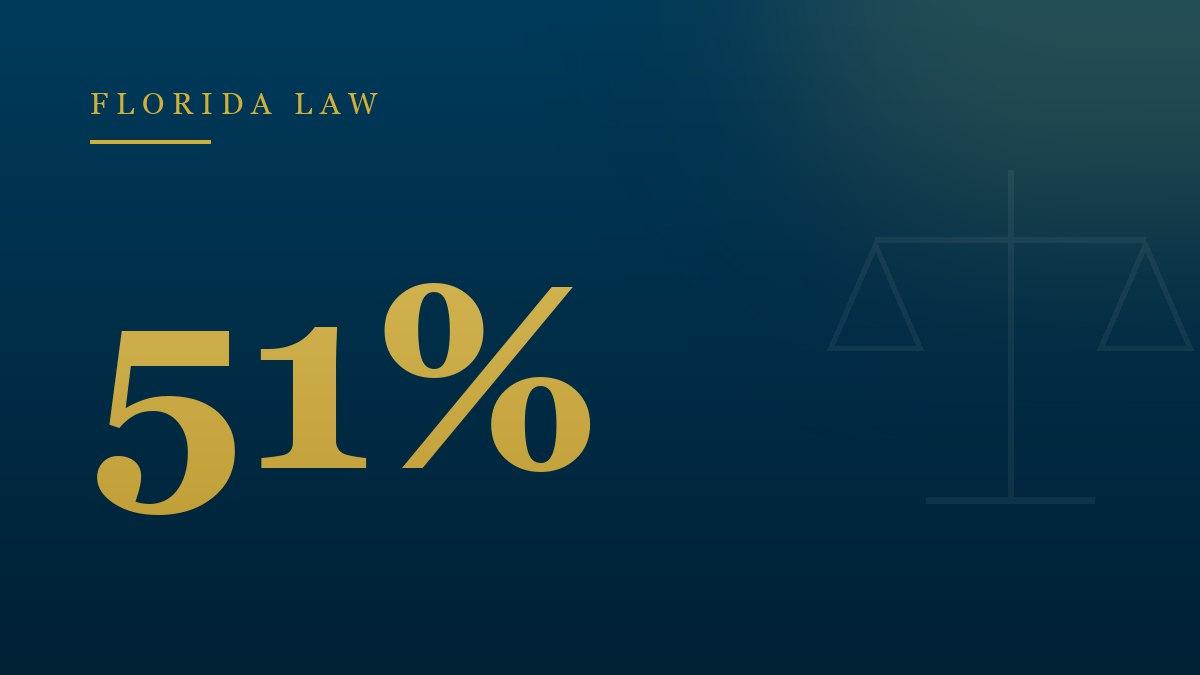
Every injury negotiation in Florida is secretly a negotiation about percentages. Under the state's modified comparative negligence rule, your compensation is reduced by your share of fault — and if that share exceeds 50%, you recover nothing at all. Adjusters know this arithmetic cold. Most claimants don't.
The rule in one example
Say your damages are $100,000. Found 20% at fault, you recover $80,000. Found 40% at fault: $60,000. Found 51%: zero. That cliff at the majority line is what changed in Florida's 2023 reforms — previously you could recover something even when mostly at fault; now the majority-fault party is barred entirely (medical malpractice cases follow different rules).
How adjusters weaponize percentages
Inside the carrier, fault allocation is a valuation dial. Nudging a claimant from 10% to 30% fault cuts the payout by tens of thousands without disputing a single medical bill — and pushing past 50% ends the claim. Expect arguments built for exactly that: you were speeding slightly, you could have avoided it, your attention lapsed.
Fighting the percentage
- Evidence beats characterization: scene photos, vehicle damage patterns, camera footage, and download data anchor fault in facts.
- Witness statements gathered early, before memories soften.
- Reconstruction when the stakes justify it — percentage disputes are where experts earn their fee.
- Never accept a fault allocation in a recorded statement; that's the number they'll build the discount on.
Fault fights are fiercest after a commercial truck crash, where the carrier's team starts building its version within hours.
How truck accident claims work→In Florida, fault percentage is the price of your claim. Treat every argument about it as the money conversation it really is.
If an insurer is inflating your share of fault, that's a fight about evidence — my specialty from both sides of the desk.
Get your fault dispute reviewed→Think this applies to your situation?
Every case is different. Get a free, confidential review from someone who has seen claims from the inside.